 MindIQIQ-Test
General intelligence quotient
CERTIFICATE
awarded to
Alex Muster
for the intelligence quotient (IQ) achieved in the MindIQ IQ test:
124
- Date
- 23 October 2026
- Certificate ID
- —
What is your IQ? Solve 20 tasks on logic, numbers, patterns and spatial thinking – and get your IQ score with a personal IQ certificate.
Start IQ test20 tasks · approx. 15 minutes
1
20 tasks on logic, numbers, patterns and space – about 15 minutes, free.
2
Your IQ score with a personal certificate and your thinking profile.
3
18 courses, 199 lessons and brain games strengthen your thinking.
MindIQIQ-TestGeneral intelligence quotient
CERTIFICATE
awarded to
Alex Muster
for the intelligence quotient (IQ) achieved in the MindIQ IQ test:
Sample with a made-up name. You get your certificate after the test for CHF 1.34.
In normed IQ tests the average is 100. About 68% of people score between 85 and 115, and only around 2% above 130.
After the test you see your own position on this curve, your percentile on the certificate and your comparison with historical figures.
Short lessons with exercises – grouped into three areas of intelligence.
All courses included in your membership.

Leonardo da Vinci
1452–1519
IQ 135–150
Estimate after Cox (1926) for childhood and early adulthood, not a measurement
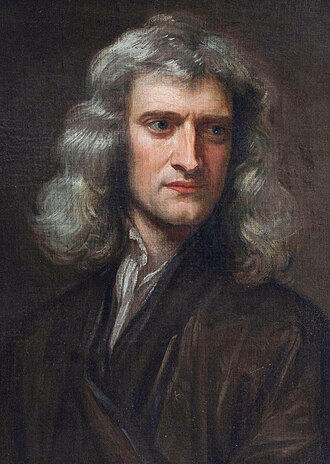
Isaac Newton
1643–1727
IQ 130–170
Estimate after Cox (1926) for childhood and early adulthood, not a measurement

Benjamin Franklin
1706–1790
IQ 145
Estimate after Cox (1926) for childhood and early adulthood, not a measurement

Thomas Jefferson
1743–1826
IQ 145–150
Estimate after Cox (1926) for childhood and early adulthood, not a measurement

Napoleon Bonaparte
1769–1821
IQ 135–140
Estimate after Cox (1926) for childhood and early adulthood, not a measurement

George Washington
1732–1799
IQ 125–135
Estimate after Cox (1926) for childhood and early adulthood, not a measurement
Images: public-domain works via Wikimedia Commons.
An IQ test that is honest about what it measures – and supports you while you practise afterwards.
Six thinking areas in the test
20 tasks · approx. 15 minutes
After the test you see where your strengths lie – in every area of thinking.
Spot rules and draw sound conclusions from statements.
Rotate, fold and combine shapes in your head.
Recognise patterns in numbers and continue them correctly.
Example values. You get your own profile after the test.
Start with 7 days of introductory membership and full access. Cancel anytime.
MEMBERSHIP
Today
CHF 1.34
7 days of introductory membership
Afterwards
CHF 10.99
every 28 days
Your introductory membership for CHF 1.34 lasts 7 days. Unless you cancel before it ends, it automatically renews every 28 days for CHF 10.99. You can cancel anytime in your account or contact us by email.
From the tasks you solved and their difficulty (item response model). The result is placed on the IQ scale with mean 100 and standard deviation 15 and shown on your IQ certificate. The MindIQ IQ test is not a clinical diagnostic procedure.
Usually 12–20 minutes. The timer is just for orientation.
Yes, any time. Repeats may score higher due to practice effects.
The test is free. Premium membership costs CHF 1.34 for 7 days, then CHF 10.99 every 28 days until you cancel. All prices include any applicable VAT.
Any time via membership management in your account.
Only you. Results are never public.
The average is 100. About two thirds of people have an IQ between 85 and 115, and only around 2% score above 130.
Partly. Education, practising thinking strategies, good sleep and focus can improve your score. How much general intelligence changes permanently is still debated in research.
Only partly. Twin studies show that genes play an important role, but environment, education, nutrition and support also shape IQ – especially in childhood and adolescence.